
It includes:
Machine Learning (ML): Algorithms that learn patterns from data.
Deep Learning (DL): A subset of ML using neural networks.
Natural Language Processing (NLP): Enables computers to understand human language.
AI algorithms can classify data, make predictions, and automate decisions with speed and accuracy.
🚀 Real-World Applications of AI
📌 1. Healthcare
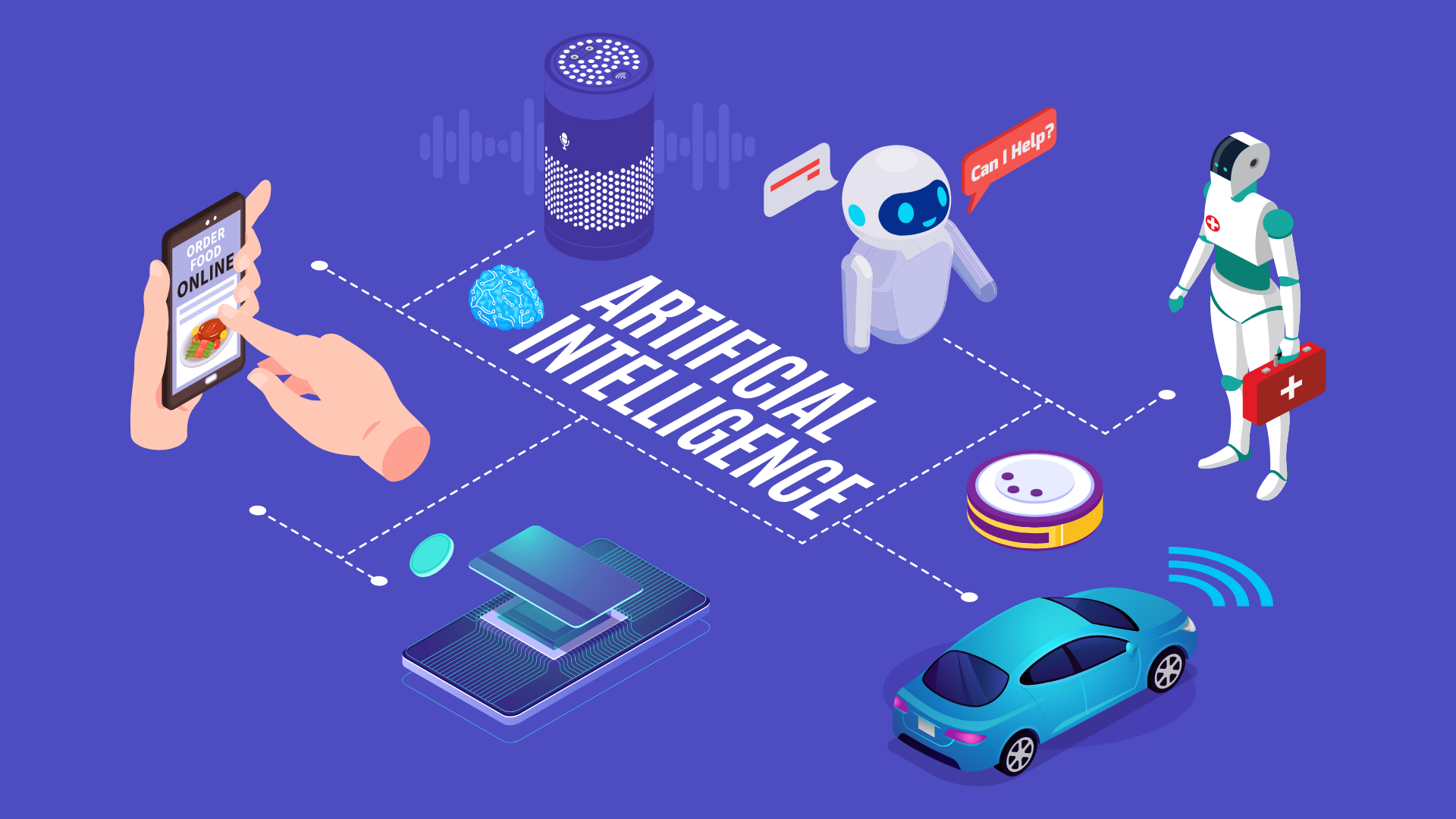
AI assists in reading medical images, predicting patient outcomes, and personalizing treatment plans — improving accuracy and saving lives.
📌 2. Finance
From fraud detection to algorithmic trading, AI helps financial institutions analyze vast amounts of data quickly and securely.
📌 3. Transportation
Self-driving cars and traffic prediction systems use AI to make travel safer and more efficient.
📌 4. Everyday Tools
Virtual assistants like Siri and Google Assistant, recommendation engines on Netflix and YouTube — these are AI at work in your pocket.
🧠 How AI Works — A Simplified View
AI systems learn from data using models — mathematical representations that generalize patterns. Here’s a simplified flow:
Data Collection → Gather real-world data
Training → Model learns patterns
Evaluation → Test accuracy
Deployment → Use in real-world applications
This process enables AI to make predictions and decisions with increasing accuracy over time.
🌱 Ethics & Challenges
AI brings incredible benefits, but also important concerns:
Bias & Fairness: Models trained on biased data can make unfair decisions.
Privacy: Handling personal data responsibly is crucial.
Job Displacement: Some roles may change or disappear, demanding new skill sets.
Responsible AI aims to ensure fairness, transparency, and safety.
🌟 The Future Is Collaborative
AI isn’t here to replace humans — it’s here to augment human capabilities. When designed responsibly, AI can help us:
Solve complex scientific problems
Improve education access
Fight climate change
Enhance creativity
The future of work and society will increasingly blend human intuition with machine precision.
💡 Conclusion
Artificial Intelligence is one of the defining technologies of our time. Its impact is vast, its challenges are real, and its possibilities are limited only by imagination and ethical stewardship.